Home / Articles
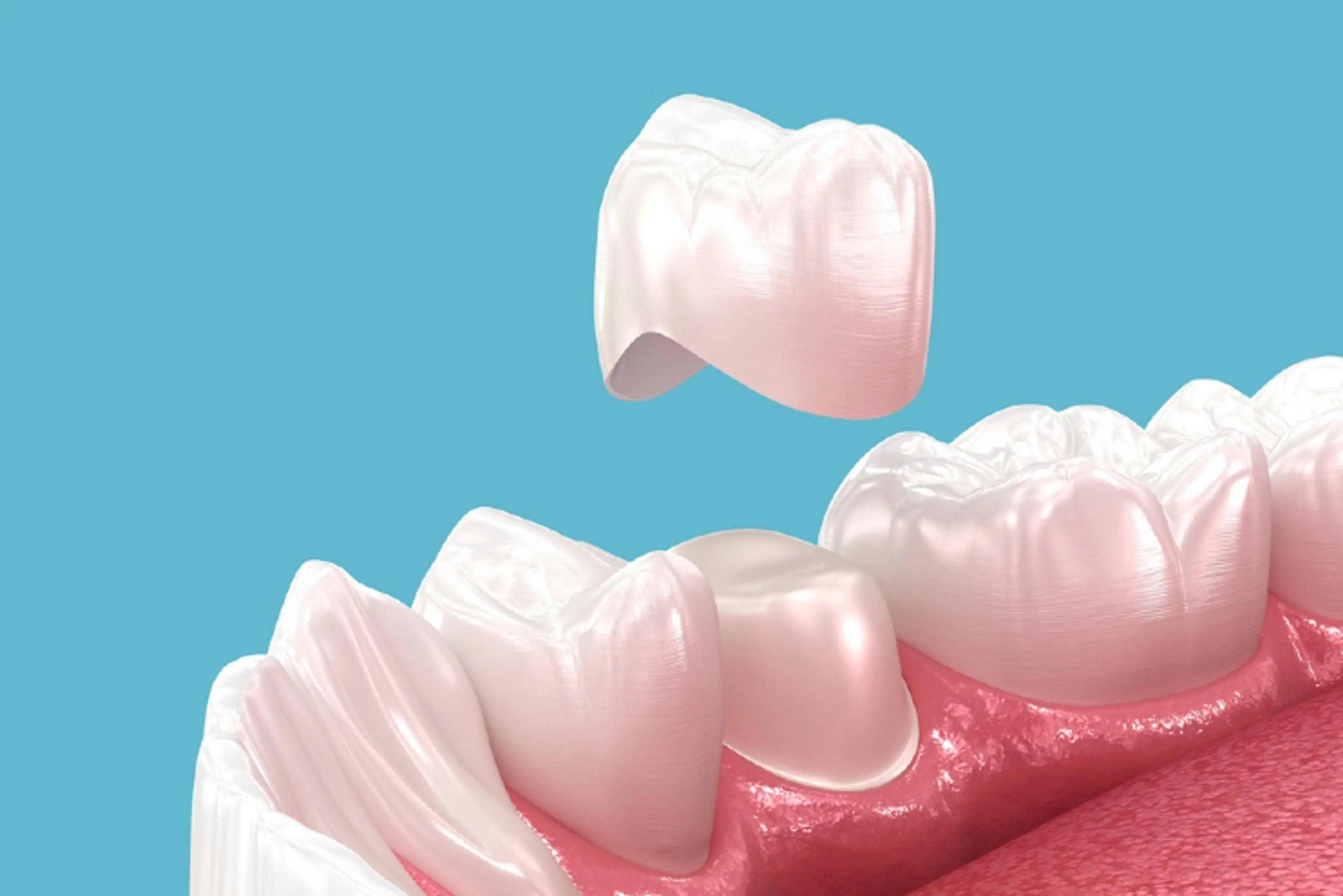
Can 3D Printing Create Permanent Dental Crowns?
Home / Articles
Can 3D Printing Create Permanent Dental Crowns?
A patient once sat in our consultation room in Apgujeong, looking at a digital scan of her tooth rotating on the screen.
Her question wasn’t naïve. It was intuitive.
In daily life, we associate 3D printing with plastic models, prototypes, or short-term objects. Translating that idea into something meant to survive years of chewing—hot soups, iced coffee, stress clenching—naturally raises doubt.
At S-Face Dental Clinic, where we’ve placed over 10,000 implants and managed thousands of complex restorative cases, we see 3D printing not as a replacement for traditional crowns—but as a powerful tool when used correctly, and a liability when used carelessly.
Let’s explore what 3D-printed dental crowns can truly do today, where they fall short, and how experienced, surgeon-led planning makes all the difference.
Digital dentistry has advanced rapidly in South Korea. In Gangnam especially, patients are accustomed to high-tech medical environments—AI imaging, guided implant surgery, same-day restorations.
As a result, many patients now ask:
“Can my crown be done in one day?”
“Is a 3D-printed crown permanent?”
“Is it as strong as zirconia?”
A dental crown isn’t decorative. It becomes part of your bite system, interacting with jaw muscles, opposing teeth, and bone.
From a surgeon’s perspective, that’s where the real discussion begins.
Using an intraoral scanner, we capture a highly accurate digital impression of the prepared tooth or implant. That scan is then designed using CAD software, allowing precise control over:
Margins (where the crown meets the tooth)
Occlusal contacts (how it meets opposing teeth)
Esthetic contours and symmetry
This additive process differs fundamentally from traditional milling, where a crown is carved from a dense ceramic block.
And that difference matters.
Why?
Because provisional crowns play a critical role in treatment success:
They protect healing tissues
They allow patients to test bite comfort
They guide gum shaping for esthetics
They reveal bite imbalances before final restoration
In this role, 3D-printed crowns are outstanding.
They are accurate, comfortable, esthetically pleasing, and fast to produce. In many cases, patients forget they’re temporary at all.
But temporary success does not automatically translate into long-term durability.
Front teeth (incisors and canines)
Patients without bruxism or strong clenching
Low-load functional zones
Interim “long-term provisional” restorations
Patients prioritizing speed over maximum longevity
In these cases, well-designed 3D-printed crowns can function satisfactorily for years, especially when carefully monitored.
However, this does not make them the universal standard.
Patients often hear phrases like “high-strength resin” or “ceramic-infused material.” These sound reassuring—but as surgeons, we look deeper.
Most permanent gold-standard crowns today are made from:
3D-printed crowns, by contrast, are built layer by layer. Even with advanced curing, this structure can introduce:
Slightly lower fracture resistance
Increased wear over time
Higher susceptibility to micro-cracks under heavy load
This difference becomes critical in molars, implant crowns, and patients with strong jaw muscles—a common profile in Korea.
Here’s something most online articles don’t mention.
Tiny stress fractures, gradual wear, microscopic loss of marginal seal—these happen long before pain appears.
As an oral & maxillofacial surgeon trained in craniofacial biology, Dr. Gin-Ah Song evaluates crowns not just as objects, but as part of a force system involving:
Jaw joint movement
Muscle strength
Occlusal timing
Bone density
A material that looks perfect on day one may behave very differently after five years of functional load.
Many clinics advertise “same-day permanent crowns,” often using 3D printing or chairside milling.
These treatments are not inherently unsafe. But patients should understand what’s being offered.
Ask yourself:
Is this truly my final crown—or a long-term provisional?
What material is being used?
How was my bite evaluated?
Will this crown last 15–20 years?
Dentistry isn’t a race. It’s closer to architecture.
You wouldn’t rush the foundation of a building just because the walls can be built quickly.
Korean patients are known for diligence in oral health—regular scaling, early intervention, and high esthetic standards.
Digital scanning and 3D printing for planning and temporaries
Surgeon-led evaluation of bite and bone
Proven ceramic materials for definitive crowns
Innovation is welcomed—but not blindly.
At S-Face Dental Clinic, technology serves the treatment plan, not the other way around.
Will 3D printing eventually replace milling for permanent crowns?
Possibly.
Materials are evolving rapidly, and research into high-strength printable ceramics is ongoing. In the future, we may see printed crowns that rival zirconia in durability.
Responsible dentistry means acknowledging both potential and limitation.
If you’re facing tooth loss, a fractured crown, or implant treatment, consider asking:
“Who is planning my bite?”
“What material fits my jaw force and lifestyle?”
“Is this crown designed for speed—or for longevity?”