Home / Articles
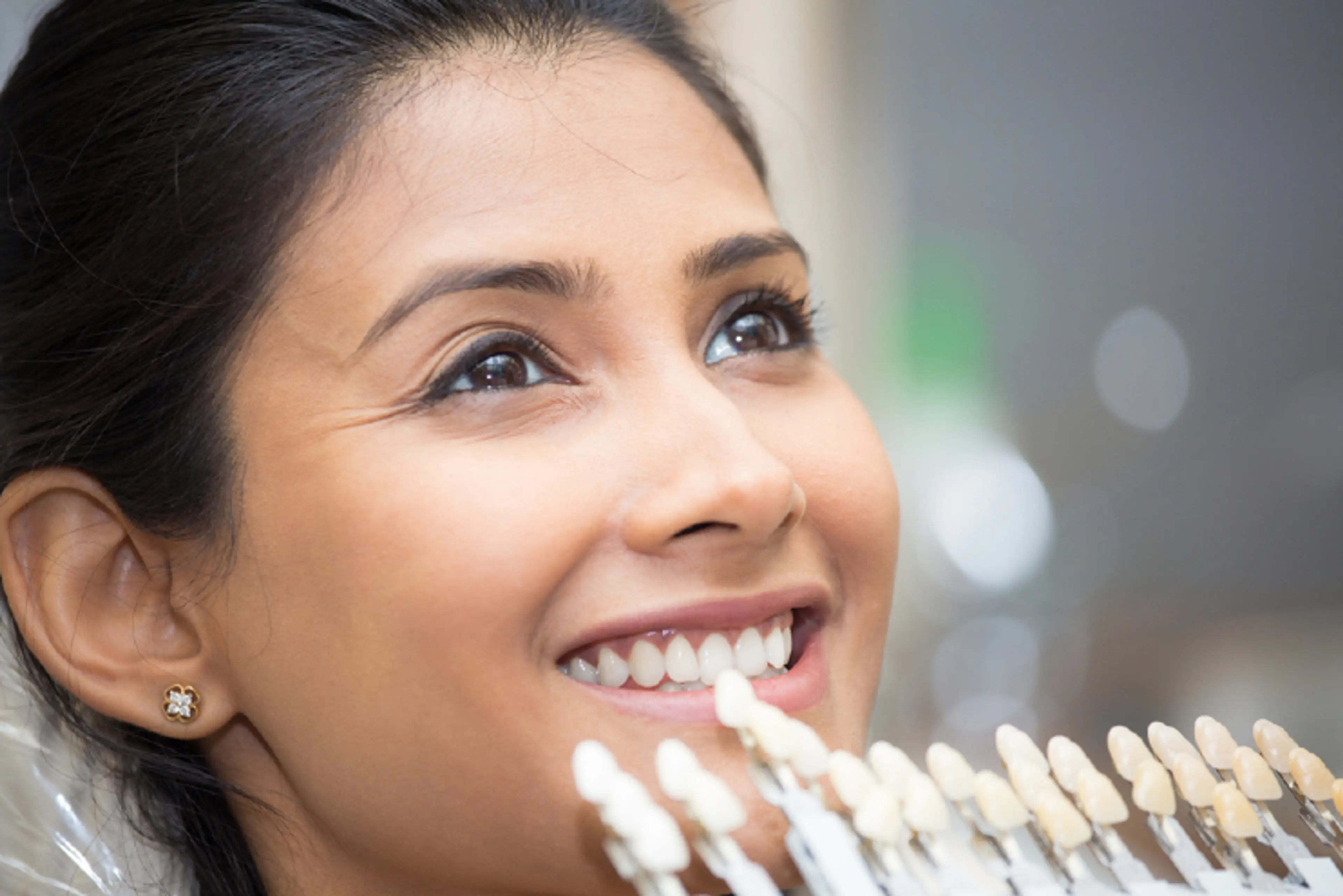
How Dentists Match Crown Shades Perfectly
Home / Articles
How Dentists Match Crown Shades Perfectly
If you’re reading this, you might understand that feeling. In Korea—perhaps more than anywhere else—people notice even the smallest changes in someone’s face. A crown that is just one shade too opaque can look lifeless under café light; one that’s too bright can stand out in group photos.
Let’s explore how dentists—and especially prosthetic-focused clinics—achieve natural, seamless results.
To be honest, tooth color is far more complex than the naked eye suggests. A natural tooth is not a flat color; it contains warm and cool tones, translucent edges, tiny internal shadows, and subtle character lines.
Crowns must mimic all of this.
A few reasons it’s challenging:
Under sunlight, they look slightly cooler. Under café lighting or indoor LEDs, teeth pick up warmer tones. This is why a crown that looked perfect in the treatment room may appear different in the mirror at home.
Enamel is translucent. Dentin is warmer and more opaque. The interplay between the two is what gives natural teeth their depth. A crown must replicate these layers—not just the surface color.
Patients here often notice tiny discrepancies that would pass unnoticed elsewhere. As clinicians, we must rise to match that expectation.
Even with advanced technology, a trained clinician—especially one familiar with Korean enamel tones—sees subtle details machines still miss.
At S-Face, we evaluate shade with:
Natural daylight and color-corrected lighting
Teeth in a hydrated state (dry enamel looks lighter)
High-magnification loupes
The patient’s facial tone and lip color
A single shade tab doesn’t cover this complexity. That’s why crowns require layered ceramics, not a uniform color.
Korean clinics, especially in Gangnam, tend to adopt new technology early. Digital shade scanners measure:
Value (brightness)
Chroma (color intensity)
Hue (warm vs. cool tones)
Translucency
These devices reduce guesswork, especially for multi-teeth restorations.
One secret from our own prosthetic workflow:
We often send photographs, shade maps, and even short video clips to our lab to show how the tooth behaves in moving light.
Static images alone can’t capture the dynamic character of a real tooth.
Patients are often surprised when we ask them to smile widely, speak, or laugh during shade selection. We’re studying how the light catches the teeth during normal movement.
Their translucency affects perceived brightness
Their shape creates shadowing
Their surface gloss impacts light reflection
This is why creating a perfect single central incisor is considered one of the most challenging tasks in dentistry.
Here’s something only clinicians deeply involved in restorative and surgical work fully appreciate:
We sometimes apply internal whitening (internal bleaching) or use opacity-modifying core materials to correct this before crown fabrication. It ensures the ceramic doesn’t have to compensate for a dark undertone—a mistake that often leads to chalky, unnatural crowns.
At clinics like S-Face, where oral & maxillofacial surgery and esthetic prosthodontics work hand in hand, shade-matching is not just about color. It’s also about the biology underneath:
Gum thickness
Gingival translucency
Bone contour
Implant angulation (for implant crowns)
Tissue health
These influence how light travels from the crown into the gumline and back out—especially in the front teeth.
This is the reason surgeon-led esthetic cases tend to look more natural. The foundation is as carefully crafted as the visible ceramic.
A crown looks unnatural when:
It is too opaque
The brightness (value) is misjudged
The translucency doesn’t match the neighboring tooth
The ceramic does not replicate subtle internal anatomy
Avoiding whitening sessions right before shade selection
Allowing teeth to rehydrate after prolonged mouth opening
Showing photos of their natural smile in different lighting
Sharing their esthetic expectations openly
To be honest, the patients who participate actively in the selection process usually end up with the most natural outcomes.
At S-Face in Apgujeong, our shade-matching workflow typically includes:
Visual shade evaluation under controlled lighting
Digital shade analysis for color precision
High-magnification evaluation of enamel patterns
Photo and video documentation
Lab communication with shade maps
Try-in appointments for fine adjustments
Personalized character staining when needed
Whether you’re restoring a single chipped tooth or planning a full esthetic restoration, choosing a clinic that values both science and artistry makes all the difference.
If you want surgeon-led precision, advanced ceramic materials, and a carefully curated shade-matching process, S-Face Dental Clinic in Apgujeong is here to help.