By S-Face Dental Clinic, Apgujeong, Seoul
Most people love that first sip of morning coffee—but few realize how quietly it leaves its mark.
Over time, coffee, tea, wine, and even everyday meals can dull our smiles, turning bright enamel into a muted shade of yellow or gray.
So, when you walk through a Korean convenience store or scroll through Instagram and see countless whitening strip brands promising a Hollywood smile in 7 days, it’s natural to wonder:
“Do whitening strips really work as well as professional whitening at a dental clinic?”
The short answer is—they work, but not in the same way or to the same depth.
Let’s explore why that difference matters, and what you should know before sticking on your next strip.
Understanding How Whitening Actually Works
understanding-how-whitening-actually-worksTo appreciate why whitening results vary, it helps to understand how teeth change color in the first place.
Tooth enamel is like glass: strong yet porous. Over time, pigments from food, drinks, and tobacco seep into these tiny pores, darkening the tooth from the inside out.
Whitening doesn’t “scrub off” stains—it oxidizes them.
Both whitening strips and professional whitening rely on peroxide-based agents (usually hydrogen peroxide or carbamide peroxide). These release oxygen molecules that break apart stain compounds and brighten enamel.
However, there’s a big difference in concentration, delivery, and control between store-bought products and in-clinic treatments.
Whitening Strips: Convenience Meets Compromise
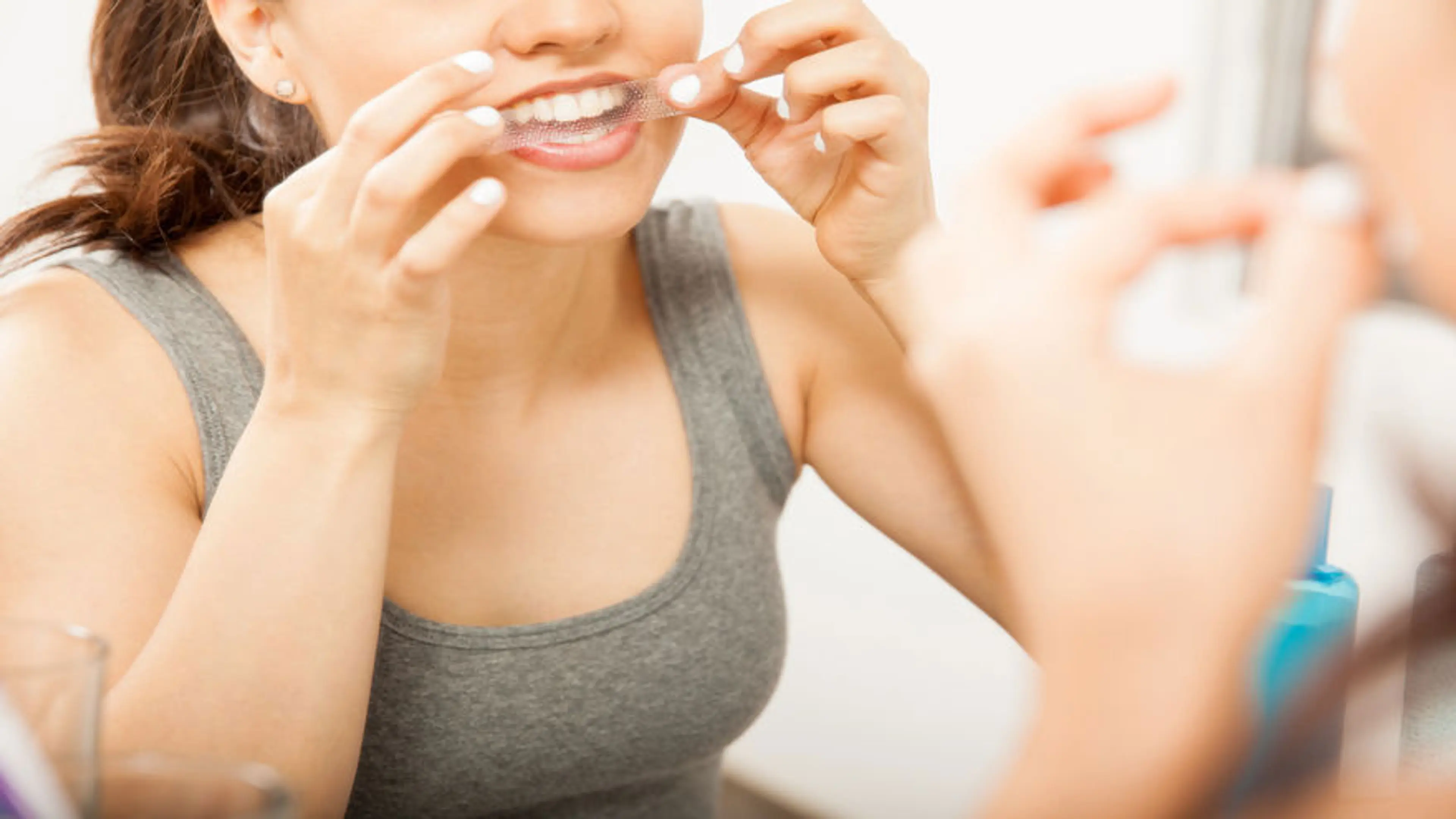
whitening-strips:-convenience-meets-compromiseWhitening strips are thin, flexible layers coated with a peroxide-based gel.
They’re designed for home use—simple, affordable, and available almost anywhere.
In Korea, many popular brands (like Crest, Oral-B, or local versions sold at Olive Young) use hydrogen peroxide concentrations of about 5–10%, compared to 25–40% used in professional whitening.
So, while strips can visibly lighten teeth by one to two shades, their effect often plateaus.
Deeper stains—especially those caused by age, medication, or internal discoloration—remain untouched.
What Whitening Strips Do Well
what-whitening-strips-do-well Easy to use at home
Lower risk of sensitivity or gum irritation
Gradual, natural-looking improvement
What Whitening Strips Can’t Do
what-whitening-strips-can't-do Can’t reach stains below the enamel surface
Results fade faster (often within 1–2 months)
Uneven whitening—especially if strips don’t fully cover teeth
Potential gum irritation if gel leaks
At S-Face Dental Clinic, we often meet patients who have tried multiple brands of whitening strips before coming in for professional care. Many say, “They helped a little, but my teeth still look dull under certain lighting.”
That’s because at-home strips mostly treat surface-level discoloration—not the intrinsic stains that make a smile look truly bright and even.
Professional Whitening: Precision and Power
professional-whitening:-precision-and-powerProfessional whitening, whether performed in-office or through custom take-home trays from your dentist, uses higher-strength, medically controlled peroxide formulas.
At S-Face Dental Clinic, we typically use systems that combine 35–40% hydrogen peroxide with LED or laser activation, which accelerates the whitening reaction safely and evenly.
Here’s what sets clinical whitening apart:
1. Concentration and Control
1.-concentration-and-controlHigher peroxide levels mean deeper stain removal. But what truly matters is precision—the ability to isolate gums, protect enamel, and adjust exposure time for each patient’s needs.
In a clinical setting, whitening gel never touches sensitive gum tissue. Barriers and suction are used to prevent irritation—something home users can’t easily replicate.
2. Even Coverage
2.-even-coverageCustom trays or in-office applications ensure uniform whitening across every surface. No patchy spots, no missed molars.
3. Immediate, Long-Lasting Results
3.-immediate-long-lasting-resultsProfessional whitening can brighten teeth by up to eight shades in a single visit. And when maintained properly (with whitening toothpaste and occasional touch-ups), results last 6–12 months or more.
4. Sensitivity Management
4.-sensitivity-managementContrary to popular belief, stronger whitening doesn’t always mean more pain.
At S-Face, we use desensitizing agents and post-treatment remineralization gels to minimize discomfort—especially for patients with naturally thin enamel.
Science Behind the Difference
science-behind-the-differenceLet’s look at the science briefly.
A 2020 clinical review in the Journal of Dentistry compared over-the-counter whitening strips with in-office bleaching systems.
The findings were clear:
In-office treatments produced 3–4 times greater shade improvement.
Results lasted longer, maintaining brightness for up to one year with proper care.
Sensitivity levels were similar when post-whitening care was managed professionally.
The takeaway: whitening strips do cause measurable improvement—but their chemical access and penetration depth are limited.
Think of it like skincare: whitening strips are like a brightening sheet mask, while professional whitening is a deep resurfacing treatment performed by a dermatologist. Both have value, but they work on different levels.
The Korean Perspective: Why Many Choose Clinic Whitening
the-korean-perspective:-why-many-choose-clinic-whitening
In Korea, where aesthetic awareness is high and dental technology is advanced, professional whitening is often preferred—even among younger adults.
Part of this is cultural. Korean dentistry emphasizes precision, prevention, and natural esthetics, not over-bleached results. Patients want a smile that’s clean, even, and harmonizes with their facial tone.
At S-Face Dental Clinic in Apgujeong, most patients seeking whitening do so for one of three reasons:
They’ve reached a plateau with strips or whitening toothpaste.
They’re preparing for a big event (wedding, job interview, media appearance).
They want long-term, controlled results without damaging enamel.
Dr. Gin-Ah Song explains it simply:
“Whitening isn’t just about color—it’s about tooth health. The goal is to remove deep pigments while keeping the enamel strong and hydrated.”
That balance is difficult to achieve with self-administered products.
What About Professional Take-Home Kits?
what-about-professional-take-home-kitsThere’s a middle ground between whitening strips and in-office whitening: custom professional take-home trays.
These kits are made from molds of your teeth, ensuring the whitening gel stays evenly distributed.
The gel itself is weaker than in-office formulas (usually 10–15% carbamide peroxide), but still stronger and more consistent than store-bought strips.
Patients wear the trays for about 30–60 minutes daily for one to two weeks, achieving results nearly comparable to in-clinic whitening—just more gradually.
At S-Face Dental Clinic, we often recommend this method for:
Patients who want flexibility at home
Those with mild sensitivity
People who prefer steady, subtle improvement
Combining both methods (one in-office session + take-home maintenance) often delivers the most stable, luminous results.
Whitening Safety: Myths vs. Reality
whitening-safety:-myths-vs.-reality “Whitening damages enamel.”
"whitening-damages-enamel."False. When performed correctly, whitening doesn’t erode enamel. It only removes organic pigments within it. Overuse or misuse, however—like sleeping with strips overnight—can cause dehydration or micro-roughness.
“Natural whitening methods are safer.”
"natural-whitening-methods-are-safer."Be cautious. Lemon juice, baking soda, or charcoal pastes can scratch enamel and alter pH balance, leading to long-term sensitivity or gum recession.
“Professional supervision makes whitening safer.”
"professional-supervision-makes-whitening-safer."Absolutely. A dentist evaluates enamel thickness, gum health, and existing restorations before whitening. For example, crowns, veneers, and fillings won’t whiten, and mismatched shades can appear if not planned properly.
Who Should Avoid Whitening Strips
who-should-avoid-whitening-strips
Whitening strips are not ideal for everyone. Avoid or delay their use if:
You have tooth sensitivity or exposed roots.
You have fillings, crowns, or veneers on visible front teeth.
You’re under 18 (enamel is still developing).
You have gum disease or untreated cavities.
In such cases, a dentist can suggest alternative whitening methods or treat underlying issues first. Whitening is most effective on healthy, clean teeth.
Cost Comparison: Strips vs. Professional Whitening
cost-comparison:-strips-vs.-professional-whiteningType | Average Cost (KRW) | Whitening Power | Duration | Supervision |
|---|
Whitening Strips | ₩30,000–₩70,000 | Low | 1–2 months | None |
Take-Home Professional Kit | ₩200,000–₩400,000 | Moderate | 3–6 months | Dentist |
In-Clinic Whitening | ₩400,000–₩800,000+ | High | 6–12 months | Surgeon/Dentist |
When viewed long-term, professional whitening offers more value per result—and fewer side effects when managed properly.
How to Maintain a Whiter Smile After Whitening
how-to-maintain-a-whiter-smile-after-whiteningNo matter which method you choose, maintenance is key.
Here’s how to protect your results naturally:
Avoid staining foods for 48 hours after whitening (coffee, curry, red wine).
Rinse with water after drinking colored beverages.
Brush twice daily with a fluoride toothpaste and soft brush.
Use a straw for dark drinks to limit contact with enamel.
Schedule touch-up sessions every 6–12 months.
At S-Face Dental Clinic, we create personalized maintenance schedules for each patient, balancing brightness and enamel safety.
Final Thoughts: It’s Not Just About Whiteness—It’s About Wellness
final-thoughts:-it's-not-just-about-whitenessit's-about-wellnessAt-home whitening strips do work—but only up to a point.
They’re an excellent entry-level tool for mild staining and maintenance, but not a substitute for the precision, depth, and safety of professional whitening.
The best choice depends on your goals, lifestyle, and oral condition.
If you want gradual refreshment, strips are fine.
If you want a radiant, even, and lasting transformation, professional whitening under expert care is the smarter investment.
To be honest, many patients who once hesitated about clinic whitening later say,
“I should have done this years ago—it feels so clean and looks so natural.”
At S-Face Dental Clinic, we believe every smile deserves the balance of science and artistry—whitening that enhances your confidence while preserving the health of your enamel.
S-Face Dental Clinic, Apgujeong | Seoul, South Korea
Advanced esthetic care. Precision by surgeons. Confidence that lasts.
5F, 37 Apgujeong-ro 12-gil, Gangnam-gu, Seoul
+82-2-544-2811